


Mental strength
Positive thinking focus

Triathlon
Swimming, cycling, running
Exclusive interview
with Ronnie Schildknecht
In triathlon, mental strength, stamina and pain management are crucial in addition to physical fitness. Read our full interview with Ronnie Schildknecht to find out more about his strategies and experiences.
Positive thinking focus
Swimming, cycling, running
with Ronnie Schildknecht
With the start of the Olympic Games, the triathlon is once again taking center stage in international sport. This fascinating endurance discipline, which combines swimming, cycling and running, demands exceptional versatility and endurance from the athletes. The following distances are covered at the Olympic Games: 1.5 km swimming, 40 km cycling and 10 km running. This distance represents a demanding challenge for both amateur and professional athletes. However, many athletes strive for even greater challenges and complete the Ironman course, which consists of a 3.8 km swim, 180 km bike ride and a final marathon (42.2 km).
In the midst of this exciting time, we had the opportunity to talk to Ronnie Schildknecht, one of Switzerland’s most successful triathletes. Ronnie has made a name for himself not only through his physical achievements, but also through his mental strength. He has established himself as an outstanding professional athlete, particularly over the Ironman distance. In this interview, he shares his insights on the importance of mental preparation, dealing with pain and the perseverance required to succeed in this demanding sport.
Ronnie Schildknecht: Yes, I was a polyathlete for a long time and played a lot of tennis and ice hockey. It wasn’t until I was about 20 that I discovered duathlon and triathlon. As I was already good at running and cycling, it was easier for me to get into these disciplines; swimming, on the other hand, was a challenge. For this reason, I concentrated on the duathlon at the beginning, as I was not yet as competitive in the triathlon. Over time, I improved in swimming and the switch to triathlon was clear – especially if you want to do the sport professionally. Even though I was still strong in duathlon, triathlon became my main focus as it was a better way to make a living. Even before my triathlon career, I trained 10-15 hours a week. I then increased this to 20-30 hours when I dedicated myself fully to triathlon.
Ronnie Schildknecht: I certainly wasn’t the athlete who trained the most. There were other athletes who trained a lot more. But mental strength is absolutely crucial in triathlon. You have to be able to stay focused for many hours and fight through difficult phases. There are always moments in a competition when your body goes on strike or your energy levels drop. This is where the mental component comes into play: you have to learn to manage these crises and stay positive. Before every race, I imagined different scenarios that could happen and thought about how I would react to them. This preparation gives you confidence and helps you stay calm in stressful situations and find a solution.
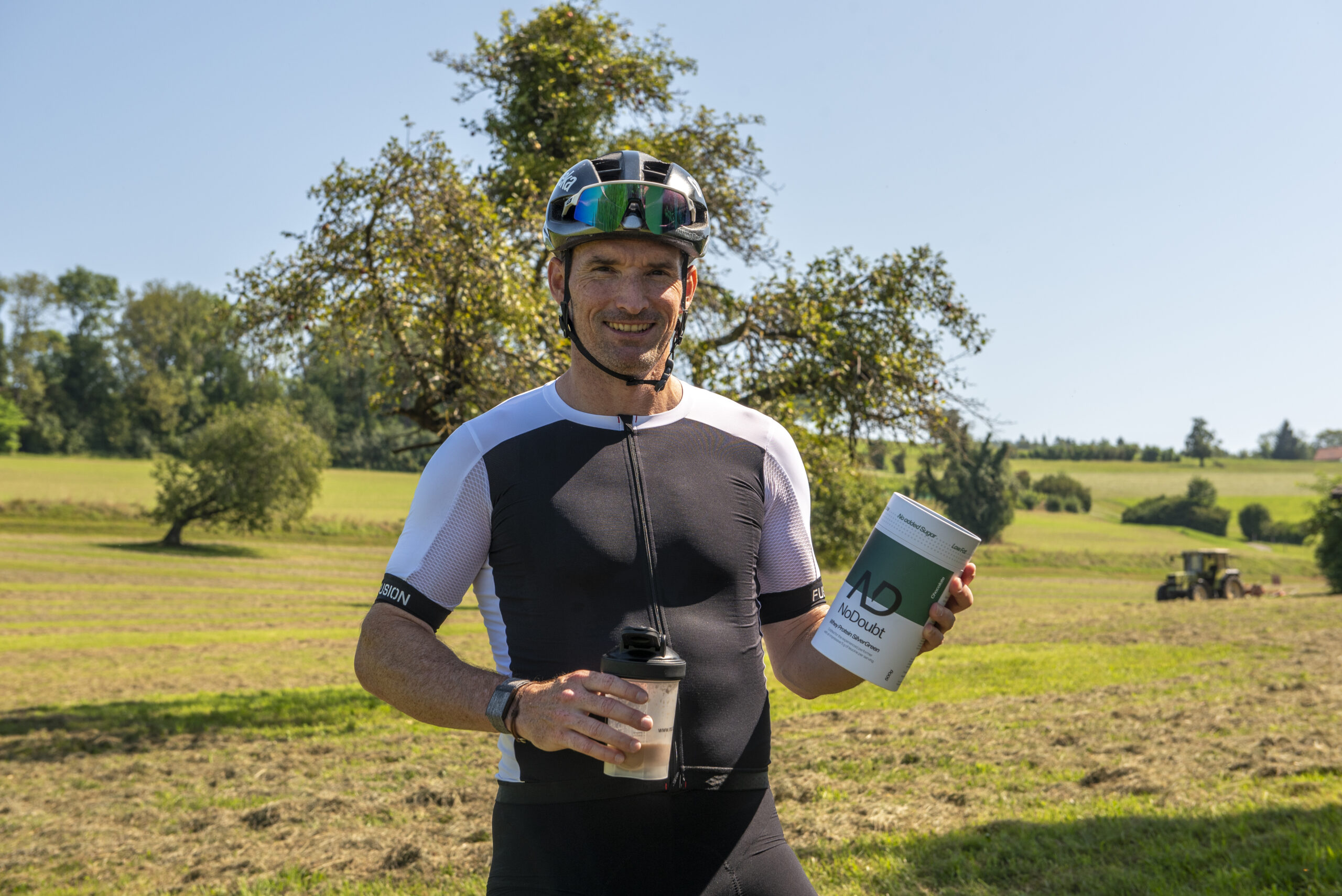
Ronnie Schildknecht: Crisis management means being prepared for the inevitable low points that can occur during a long race. This could be a physical setback, such as a cramp or a lack of energy, or a mental crisis where you feel like you can’t go on. The key is not only to anticipate these situations but also to have concrete strategies to deal with them. This might involve using specific breathing and relaxation techniques or motivating yourself with positive thoughts. It’s about remembering why you’re doing this and appreciating the small successes along the way.
Ronnie Schildknecht: It’s a big challenge to stay focused over such a long period of time. One method that has helped me is to mentally play through the competition beforehand. I imagine how I will cope with the different phases of the race, from the excitement at the start to the highs and lows during the competition and the feeling of crossing the finish line. This mental preparation helps you to be less surprised or overwhelmed during the race itself, as you have already been in these situations mentally.
Another crucial element is “positive thinking.” This involves focusing on the positive aspects of the race and your progress, even when things aren’t going smoothly. It helps to remind yourself of the enjoyment you get from the sport and to celebrate small achievements. For example, you might tell yourself, “I handled that section well” or “I have the strength to push through.” Maintaining this positive mindset can be a powerful motivator and keeps you focused on your goals.
Ronnie Schildknecht: Suffering is simply part of triathlon. It’s a controlled ordeal that you overcome through training and preparation. In 2017, I achieved one of my fastest times at Ironman Texas, namely 7 hours, 56 minutes and 21 seconds. That was a tough achievement that required a lot of training and endurance. The competition itself can be very painful, much like a long day at the office, which many people find tiring. It’s about fighting through difficult phases and staying focused. I have come to accept and even appreciate this kind of suffering because it is part of the process of improving. Ultimately, it’s all a question of focus: my focus was on professional sport. In addition to hard training and talent, you also need to be willing to suffer in order to achieve times under 8 hours. When you have a goal in mind, be it in your working career, in sport or in any other field, it is crucial to maintain this focus and accept the challenges that come with it.
Ronnie Schildknecht: I also had certain physical problems. My back, for example, was a weak point, as was the area around my buttocks. I learned to deal well with pain, especially during the competition. There were moments when I was in pain and still managed to win. I crashed once and still managed to win the race. That’s when I’m fully the competitor; I can subordinate everything else. That may not always be healthy, but it hasn’t put me at a disadvantage. It’s important to take measures during training to look after your body, such as massages or sufficient rest. Even if you would like to train more, you sometimes have to take it easy to avoid injury or overtraining.
Ronnie Schildknecht: It’s very important to recognize the body’s signs and react to them. Overtraining can happen quickly, especially if you are constantly pushing yourself to the limit. It’s important to recover sufficiently and not just constantly increase the quantity of training. Today there are many technical aids that help to monitor the condition of the body, but ultimately you have to learn to listen to your own signals.

Ronnie Schildknecht: In triathlon, nutrition is like the fourth sport. During training and competitions, I make sure I consume enough carbohydrates and electrolytes to have energy and avoid cramps. But it’s also important not to be too hard on yourself. You should treat yourself to something every now and then, as long as it remains in moderation. A balanced diet not only helps the body, but also the mind. However, mental strength, which I often refer to as the fifth sport, is just as important. It is just as trainable as physical strength and plays a key role in overcoming the challenges of triathlon.
Ronnie Schildknecht: It’s important to be patient and enjoy the process. Triathlon is not just a physical test, but also a mental one. You have to be prepared to fight through difficult times and always think about the big goal. Everyone has their own challenges and it’s crucial to find your own path and accept that there will be ups and downs. The key is to never give up and always go one step further, even when it’s hard.
Another important piece of advice is to start slowly. Many newcomers have the ambition to start with an Ironman right away. I recommend starting with shorter distances such as the Olympic distance. It makes sense to first familiarize yourself with the requirements and procedures of the triathlon. Then you can gradually build up and tackle longer distances, such as the half Ironman, before taking on a full Ironman. The body needs time to adapt to the strain and it is better to proceed step by step in order to be successful in the long term and avoid injuries.
Many people start with the Ironman right away, which is possible, but not ideal. It’s better to ease yourself into it and set realistic goals, such as a time of 16 hours or simply reaching your goal. I recommend training for a triathlon for at least 1 to 1.5 years before taking part in a competition. You can also attempt an Olympic triathlon from a standing start; many people can still manage this. But you should prepare well for your first Ironman to give yourself the best chance of a successful and healthy finish.
Ronnie Schildknecht: Over time, I’ve learned that mental strength is just as trainable as physical strength. It’s a skill that you can develop and improve. It’s not just about persevering, but also about acting wisely at the right moment and finding the right balance. The experience has helped me to strengthen my mental resilience and deal better with the challenges that triathlon brings.
Ronnie Schildknecht impressively demonstrates that triathlon requires far more than just physical fitness. Mental strength, stamina and the ability to deal with pain are essential components of his success. His experience and advice are invaluable not only for triathletes, but for anyone pursuing big goals. For all aspiring triathletes, this is a valuable lesson: prepare not only physically but also mentally for the challenges of this demanding sport. Only those who are prepared to train their mental stamina will be successful in triathlon – and in life – in the long term.

From the age of 30, our body undergoes natural changes that affect our fitness and health. Muscle mass decreases, especially in the 40s, and muscle regeneration slows down considerably. This leads to a decline in your strength and performance.
Discover solutions that enable you to counteract muscle loss at an early stage and maximize your performance from the age of 40.

Women have long been neglected in sports science. The female cycle was seen as a disruptive factor, which meant that recommendations were often based on male needs and ignored the specific requirements of women.
Discover solutions that tackle nutrient deficiencies from the ground up and maximize female performance.
Um das beste Erlebnis zu bieten, verwenden wir Technologien wie Cookies, um Geräteinformationen zu speichern und/oder darauf zuzugreifen. Wenn du diesen Technologien zustimmst, können wir Daten wie das Surfverhalten oder eindeutige IDs auf dieser Website verarbeiten. Wenn du nicht zustimmst oder deine Zustimmung zurückziehst, können bestimmte Merkmale und Funktionen beeinträchtigt werden.