2. How exercise duration shifts the energy mix
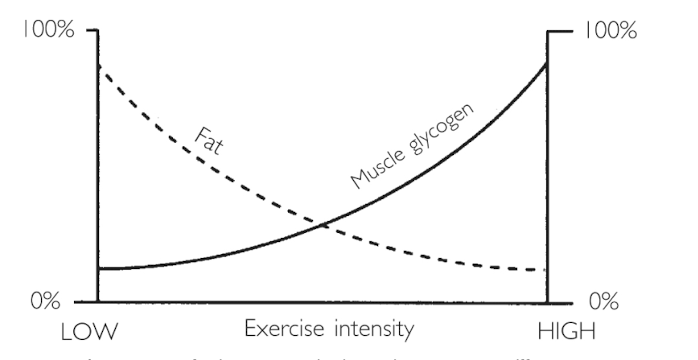
The longer your effort, the more glycogen you burn. Eventually, your body relies increasingly on fat reserves.
Goal: Conserve glycogen, increase fat usage.
3. How your training status affects fat burning
Well-trained athletes burn more fat efficiently because they:
- Have more mitochondria (the cell’s powerhouses)
- Activate more fat-burning enzymes
- Delay switching to carbs
👉 You can train this through consistent low to moderate-intensity sessions.
4. How nutrition influences your fuel use
- Carb-loading → Promotes carb-based metabolism
👉 Learn more about carb-loading here - Low-carb or fasted training → Enhances fat oxidation
Research shows that strategies like “Train Low” (Burke et al., 2022; Jeukendrup, 2023) significantly improve the body’s ability to burn fat.
📎 More on fat metabolism in women here
How to train your fat metabolism – 4 actionable tips
1. Train in Zone 2 regularly
→ 60–70 % of your max heart rate
→ Easy pace = optimal fat burning
2. Do 1–2 low-carb sessions per week
→ 60–90 min in the morning before breakfast
→ Consider a protein shake instead of carbs – preserves muscle and lowers cortisol
→ Important: No intervals – keep it low and steady!
3. Know your personal zones
→ Ideally through spirometry testing
→ You’ll discover when you burn fat vs. carbs most efficiently
💡 On a budget?
Try the Engine Check from Swiss Cycling – simple, effective, affordable.
👉 Here’s how it works
4. Listen to your body
→ Can you still talk easily? → You’re burning fat
→ Breathing heavily? → You’re burning carbs
Conclusion – Why Fat Burning Is Your Endurance Superpower
Whether you’re racing ultra distances, bikepacking, or just riding longer:
Your ability to burn fat instead of carbohydrates is key to long-term performance and energy stability.
It’s not about cutting carbs – it’s about making your metabolism flexible and resilient.
Fat for the journey. Carbs for the boost.
Just like Clarissa.
And just like you – with the right training and metabolic awareness.
Previous parts of the series:
Part 1: Ride or Die
👉 Why female athletes should (and must) train fat oxidation
Read now
Part 2: Hydration in Sport
👉 Balancing thirst, performance, and risk
Go to article